Built to Move Taekwondo Forward: Daedo Presents Gen3X and AI Motion Detection
On 6 September 2026, during the Muju Grand Prix weekend, we held a controlled technology demonstration at Pyeongwon-gwan in Taekwondowon, bringing together representatives from World Taekwondo, the Korea Taekwondo Association and Korean taekwondo media.
This session highlighted two key areas of progress: the new Gen3X Protector and Scoring System (PSS) and the continued development of our AI motion-detection platform.
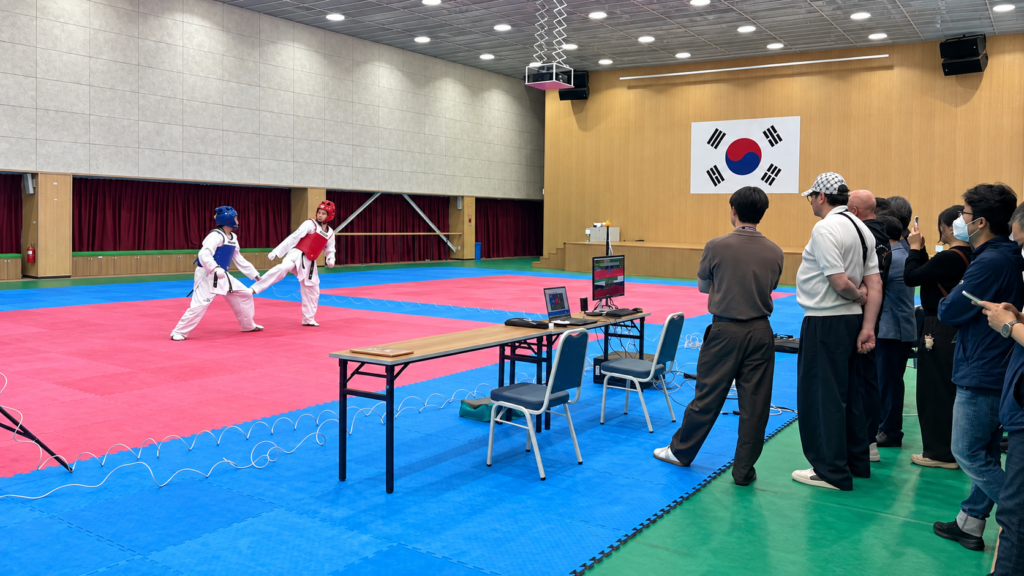
Two athletes demonstrate the Gen3X PSS while technical representatives observe at Pyeongwon-gwan, Taekwondowon.
Gen3X in action
Punch detection is one part of our broader development work on Gen3X. The complete PSS brings together electronic body and head protectors, sensing footwear and scoring software to detect, process and register scoring actions.
At Taekwondowon, participants were able to experience the system first-hand, testing kicks on training dummies while the hardware-test display showed how the equipment detected and responded to each impact.
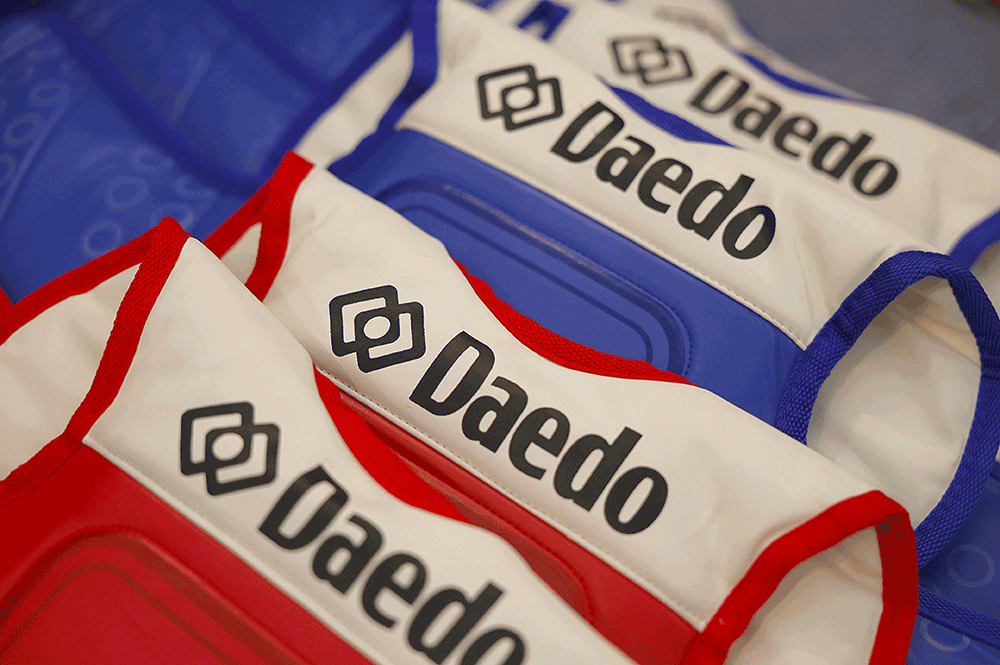
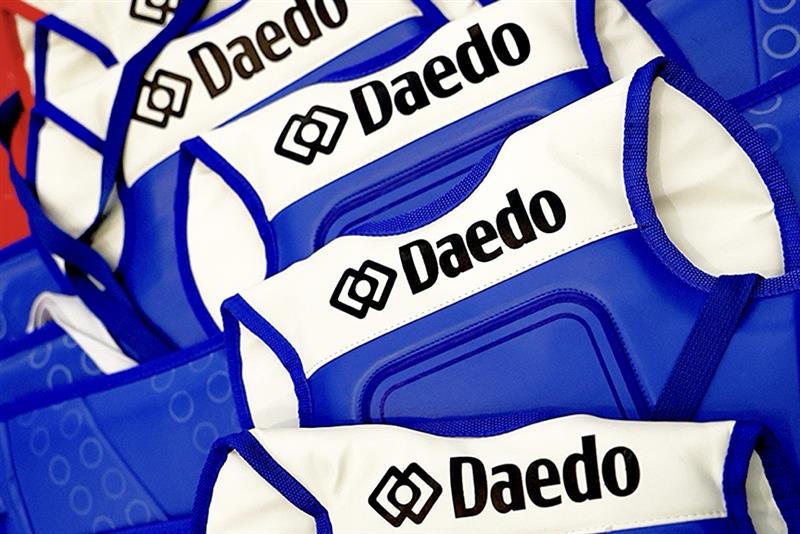
Daedo Gen3 body protectors, pictured in coverage of the German Open 2025. Image source: MASTKD.
Hands-on testing of Daedo Gen3, with electronic head and body protectors, sensing footwear and the hardware-test display.
A kicking demonstration using Daedo Gen3 equipment on a training dummy.
From initial concept to Gen3X
When development of punch detection began, no formal specification or defined sensing area had been provided. Our engineering team therefore based the initial design on the conventional taekwondo body punch, or momtong jireugi, targeting the central area of the torso.
This first solution was field-tested at the German Open in Hamburg in September 2025, providing an important reference point for the next phase of development.
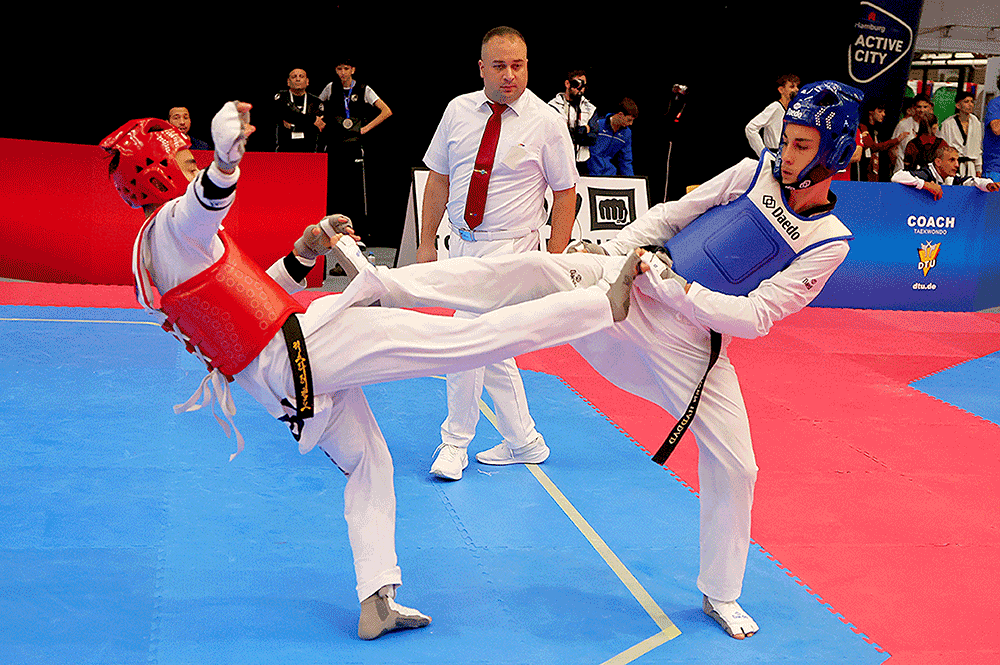
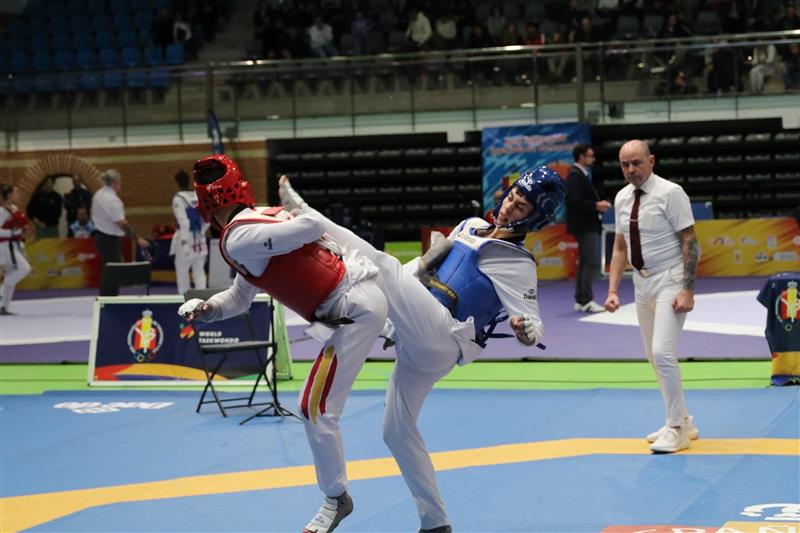
Daedo Gen3 PSS in competition at the German Open in Hamburg, September 2025. Image source: MASTKD.
The next stage came during the Wuxi 2025 World Taekwondo Championships, where we met with the World Taekwondo Technical Committee and specifically sought clarification on the required punch-detection area. The guidance provided at that meeting was to expand detection from the central torso to the entire front of the hogu.
Following that direction, our engineering team developed, tested and refined a front-area detection solution over the following months.
In early March 2026, the written specification expanded the required detection area further. Punch detection was now required across the entire valid scoring area of the body PSS, including the lateral areas, extending beyond the front-area solution developed following the Wuxi guidance.
With approximately three months to adapt to this expanded requirement, our engineering team developed a new technical solution, recalibrated the system and prepared it for field testing. The Taekwondowon session demonstrated the resulting Gen3X system in a real field-of-play environment and provided further observations for the next stage of refinement.
Gen3X: punch detection across the valid scoring area
For the demonstration, we installed one field of play with the new Gen3X PSS, developed to meet World Taekwondo’s expanded punch-detection requirement. Its body protector incorporates punch-sensing technology throughout the valid scoring area, allowing the system to detect impacts in both the central and lateral zones of that permitted area.
The session also showed why calibration is as important as detection. In the first configuration, the hit level—the minimum force required for an impact to be treated as a potential scoring action—was too low, making impacts too easy to register. After we raised the threshold, athletes had to deliver a more meaningful impact before the action could proceed to confirmation. Contacts below the threshold remained available within the system data for evaluation but were not displayed as scoring actions.
Two female high-school team athletes took part in the session. Their testing reinforced an important principle: a single calibration cannot represent every athlete. Sex, weight category and physical characteristics all influence how an appropriate threshold should be established. Our longer-term objective is therefore to develop dedicated calibration profiles for each competition category.
Daedo’s priority is to minimize missed actions caused by sensor performance, and the Taekwondowon demonstration showed promising consistency across the valid scoring area. That reliability will continue to be tested under controlled laboratory conditions and, subject to approval, in the field.
A key development priority for Gen3X is consistent detection across the full valid scoring area. The Taekwondowon demonstration produced promising results in this respect, which will now be further evaluated under controlled laboratory conditions and, subject to approval, in field testing.
A separate path: AI motion detection
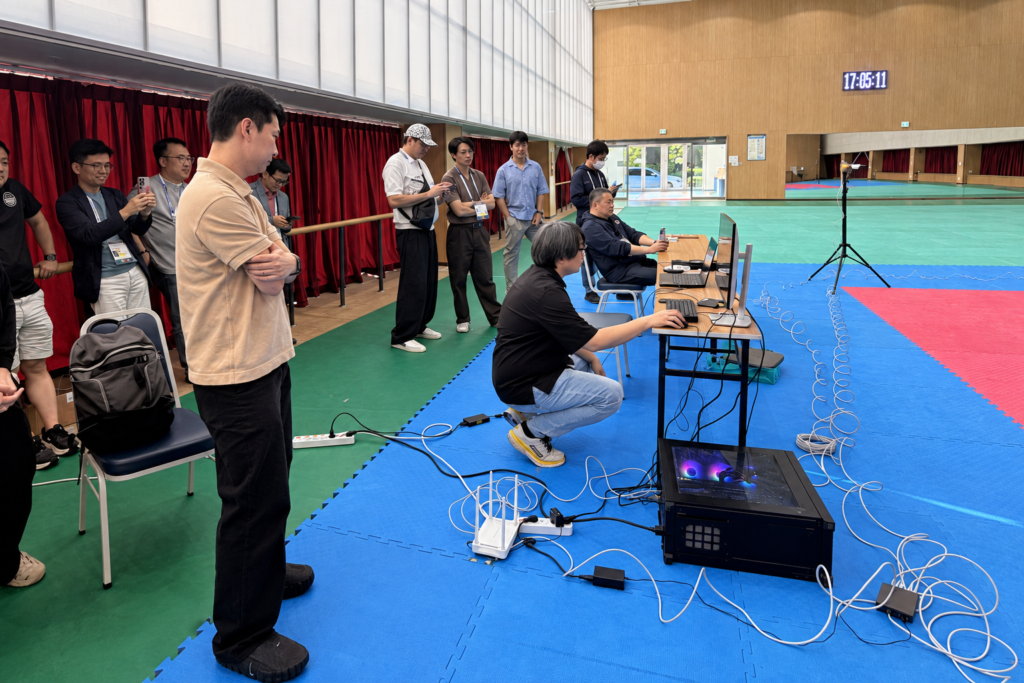
Alongside this work on impact detection, we are exploring how camera-based movement analysis could help assess the technique behind an action. At Taekwondowon, we presented an AI motion-detection prototype using four cameras and a dedicated computer. Gen3X and the AI platform were not connected during this demonstration; each was shown as an independent technology.
After lowering the speed threshold to suit the participating athletes, the AI system successfully recognized punches using arm extension and changes in fist speed and acceleration.
The system also filtered out a close-range contact made without arm extension. Distinguishing a punch that meets the movement criteria being tested from simple contact is one of the central challenges this development is designed to address.
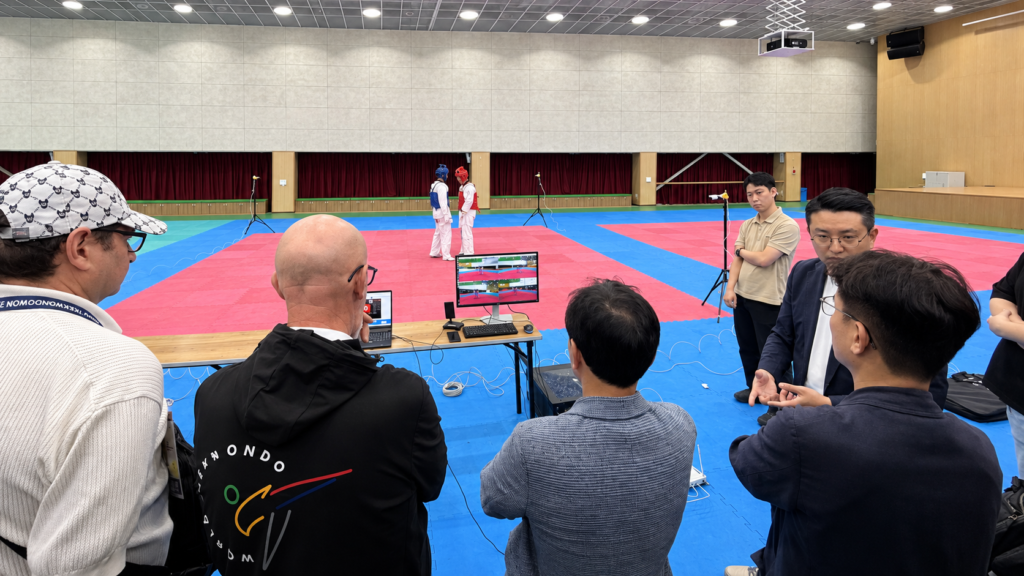
Observers review the monitoring screens as athletes demonstrate the technology on the field of play.
The AI platform remains a research-and-development project, and its eventual role has not yet been fixed. One possible route is a future vision-based scoring system, provided that impact level can be calculated with sufficient accuracy. Another is to use AI first as a confirmation tool for actions such as punches and turning kicks that are currently scored by corner judges. Further development and validation will determine the right approach.
What comes next
Gen3X has continued to evolve through each stage of development, from the first punch-detection concept to the expanded solution demonstrated at Taekwondowon. As technical requirements have been clarified and extended, our engineering team has responded by developing, testing and refining the system to meet them.
Gen3X is now progressing through the evaluation process, with laboratory testing underway and a field test at a European championship expected to follow. Subject to successful completion of these stages, the system is planned for its first official use at the 2026 Grand Prix Final in Astana.
The Taekwondowon session also marked another step in our longer-term research into AI motion detection. While Gen3X moves towards competition use, this parallel development continues to explore how accurately athlete movement can be recognised and how that technology could support scoring in the future.
For both projects, the objective remains the same: dependable scoring technology that supports athletes, coaches and officials at the highest level of competition. Gen3X continues to progress through that development and evaluation process, and each stage provides the data and experience needed for the next.